Modern applications handle sensitive information, including customer details, financial records, login credentials, and business data. Protecting this information is essential for every organization that develops or operates software. However, applications can contain security weaknesses that attackers may exploit. Understanding how application security testing solutions work helps businesses identify vulnerabilities, reduce risks, and protect their users before security problems become serious. 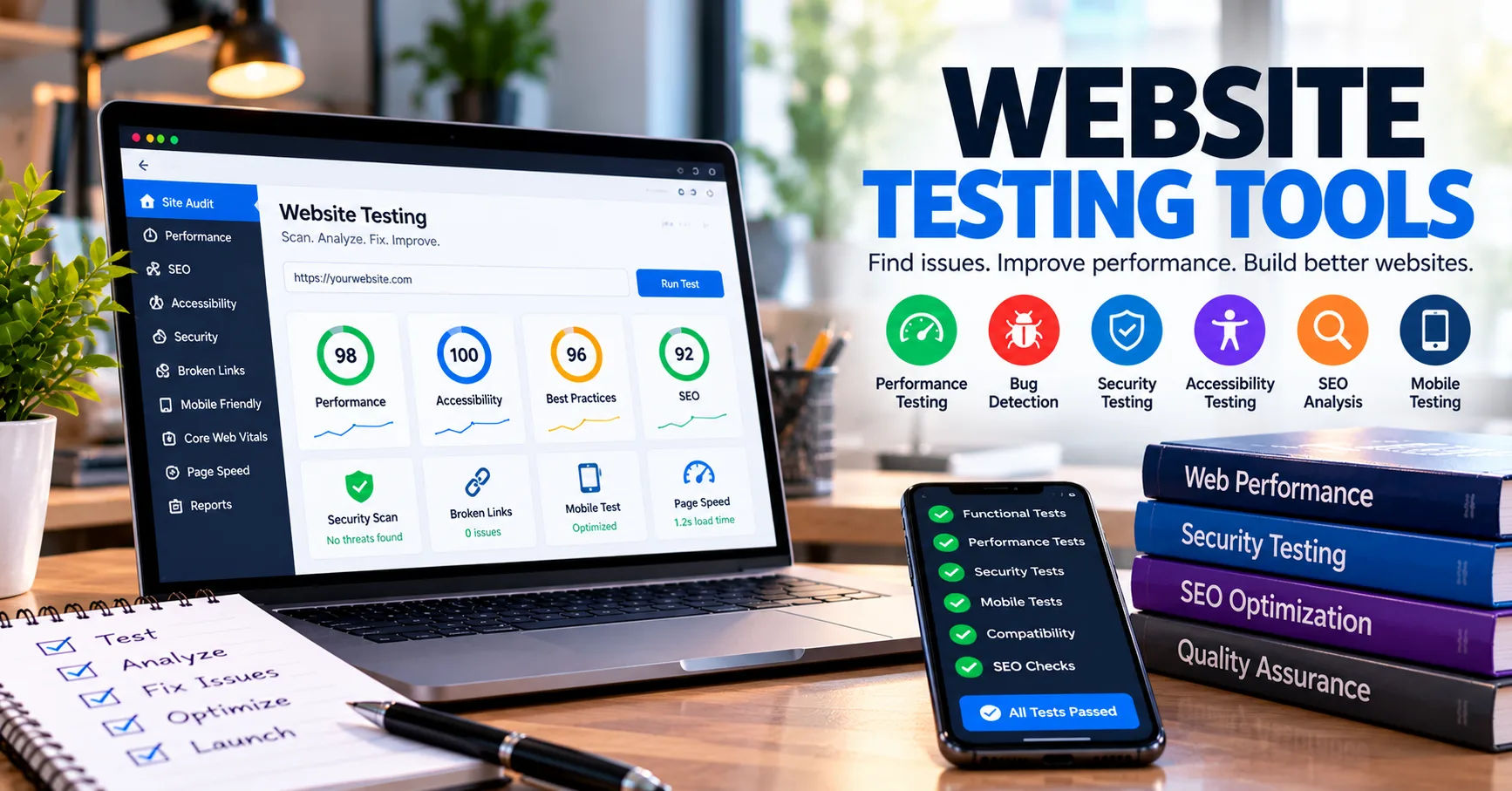 These solutions examine software to discover weaknesses in its code, design, configuration, and behavior. They help developers understand where vulnerabilities exist and what changes are necessary to fix them. Rather than waiting for a cyberattack to reveal a problem, organizations can use security testing throughout the development process to identify risks early.
The growing complexity of modern software makes security testing more important than ever. Applications frequently connect to databases, cloud platforms, third-party services, and external APIs. Each connection introduces potential risks that require careful evaluation. By combining automated tools, expert analysis, and repeatable testing procedures, organizations can build safer applications and maintain stronger security throughout their software's lifecycle.
Application Security Testing
Application security testing is the process of examining software to identify vulnerabilities that could allow unauthorized access, data theft, service disruption, or other harmful activities.
Testing can take place during development, before an application is released, or after deployment. The objective is to discover weaknesses before attackers can exploit them and to verify that security controls work as intended.
For example, an online store may contain a vulnerability that allows one customer to view another customer's order details. Security testing can identify this access-control problem and help developers correct it before sensitive information is exposed.
Application security testing covers websites, mobile applications, desktop software, APIs, and cloud-based services. The specific testing methods depend on the application's technology, architecture, and potential threats.
Why Security Testing Matters
Software vulnerabilities can create serious consequences for individuals and organizations. A successful attack may expose confidential information, interrupt business operations, damage customer trust, or result in regulatory penalties.
Security testing helps organizations address these risks by identifying weaknesses and prioritizing corrective action.
It also supports secure software development practices. When developers understand common vulnerabilities, they can avoid repeating mistakes and create more reliable applications.
Testing does not guarantee that an application will never be attacked. Instead, it reduces the likelihood that known weaknesses will remain unnoticed and provides a structured way to manage security risks.
How Application Security Testing Solutions Work
Most application security testing solutions processes follow a series of connected steps. Although individual tools may use different technologies, the general objective remains the same: examine the application, identify weaknesses, evaluate their significance, and help teams resolve them.
Step 1: Discover and Map the Application
The first step is understanding what needs to be tested.
Security teams identify the application's components, including source code, web pages, APIs, databases, authentication systems, and external integrations. They also examine how information moves between these components.
This discovery process establishes the testing scope. Without a clear understanding of the application, important features or exposed entry points might be overlooked.
For example, an application may have a customer portal, an administrator dashboard, and several APIs. Each component has different permissions and security requirements. Mapping them helps testers determine which areas deserve attention.
Step 2: Identify Potential Security Weaknesses
After discovering the application's structure, testing tools examine it for signs of vulnerabilities.
Depending on the testing method, they may analyze source code, inspect running application behavior, send controlled requests, or compare configurations against recognized security rules.
Common weaknesses include:
-
SQL injection vulnerabilities.
-
Cross-site scripting (XSS).
-
Broken authentication and session management.
-
Incorrect access controls.
-
Insecure application programming interfaces.
-
Exposed credentials and sensitive information.
-
Outdated libraries containing known vulnerabilities.
-
Security configuration errors.
Some tools use predefined rules to identify suspicious patterns, while others simulate attacks in a controlled environment. More advanced solutions may combine several approaches to provide broader coverage.
Step 3: Analyze and Prioritize Findings
Not every security finding represents the same level of danger.
A testing solution evaluates detected weaknesses using factors such as exploitability, potential impact, application exposure, and the sensitivity of affected information.
For example, a vulnerability that allows unauthorized access to customer financial records usually requires more urgent attention than a minor issue involving a non-sensitive informational page.
Many security teams use severity ratings such as critical, high, medium, and low. Some also consider the Common Vulnerability Scoring System (CVSS), business context, and whether a vulnerability is actively being exploited.
Prioritization helps developers focus on the problems that pose the greatest risks instead of treating every alert as equally important.
Step 4: Report Findings Clearly
Once vulnerabilities have been identified and assessed, the solution generates a report.
A useful report explains the affected component, the vulnerability type, the potential consequences, and recommended corrective actions. Depending on the tool, it may also include evidence, affected code locations, request details, or reproduction steps.
Clear reporting is important because developers need enough information to understand and reproduce a problem.
For instance, a report might identify an API endpoint that allows users to access records without verifying ownership. It can explain the missing authorization check and recommend validating permissions on every relevant request.
Step 5: Fix Vulnerabilities and Retest
Finding a vulnerability is only part of the process. Developers must correct the underlying issue and verify that the correction works.
They may modify code, update a vulnerable dependency, strengthen authentication, change access permissions, or adjust security configurations.
After the change, the application should be tested again. Retesting confirms whether the vulnerability has been resolved and whether the fix introduced another problem.
This feedback loop turns security testing into an ongoing improvement process rather than a one-time inspection.
Major Types of Application Security Testing
Different testing methods examine different parts of an application. Understanding their differences helps organizations select a suitable combination.
Static Application Security Testing (SAST)
Static application security testing examines source code, bytecode, or other application representations without requiring the software to run.
SAST tools search for insecure coding patterns, unsafe functions, missing validations, and other potential weaknesses.
For example, a tool may detect code that builds a database query by directly combining user input with a SQL statement. This pattern could create an SQL injection vulnerability if the input is not handled safely.
SAST is particularly useful during development because developers can discover problems before an application reaches production.
However, static analysis may generate false positives or miss vulnerabilities that depend on runtime behavior. Human review and additional testing can improve accuracy.
Dynamic Application Security Testing (DAST)
Dynamic application security testing examines an application while it is running.
Instead of reviewing source code, DAST tools interact with the application through interfaces such as web pages and APIs. They send controlled requests and analyze the responses for signs of security weaknesses.
For example, a DAST tool may test whether an application properly handles unexpected input or prevents unauthorized requests.
This approach can identify issues that appear only during execution, including certain authentication, session management, and configuration problems.
DAST is useful for testing deployed or test-environment applications. However, it may struggle to identify the exact source-code location responsible for a vulnerability because it generally operates from the outside.
Interactive Application Security Testing (IAST)
Interactive application security testing combines aspects of static and dynamic testing.
IAST tools monitor an application while it runs through normal tests or controlled interactions. Depending on the implementation, they may observe data flows, function calls, and security-relevant behavior inside the application.
This additional visibility can help connect a detected vulnerability to the code responsible for it.
IAST may be especially useful for teams that run automated functional tests as part of continuous integration. Its effectiveness depends on how thoroughly the application is exercised during testing.
Software Composition Analysis (SCA)
Modern applications often depend on open-source packages, frameworks, and third-party libraries. These components can contain vulnerabilities even when the organization's own code is secure.
Software composition analysis identifies dependencies and checks them against vulnerability databases and related security information.
For example, an application might use an outdated library with a publicly documented security flaw. An SCA tool can identify the affected version and suggest upgrading to a secure release.
Some solutions also examine license requirements and dependency relationships.
Because third-party components are widely used, SCA is an important part of a comprehensive application security program.
API Security Testing
Application programming interfaces allow software components to communicate and exchange information. However, poorly protected APIs can expose sensitive data or permit unauthorized actions.
API security testing evaluates authentication, authorization, input validation, rate limiting, and other controls.
A tester might verify whether changing an account identifier in an API request allows one user to retrieve another user's information.
These tests are important because an API can expose business functions directly, even when the application's visible interface appears secure.
Penetration Testing
Penetration testing involves authorized attempts to exploit security weaknesses in a defined environment.
Human testers may combine automated tools with manual investigation to understand how vulnerabilities could be used together. They often examine business logic, complex authorization rules, and unusual attack paths that automated tools might overlook.
Penetration testing can provide valuable insight into real-world attack scenarios.
However, it requires careful planning, appropriate authorization, and clear boundaries to avoid disrupting services or accessing data beyond the approved scope.
How Automation Improves Security Testing
Automation allows teams to run repeatable security checks more frequently and consistently.
Instead of manually inspecting every code change, developers can configure testing tools to examine new code, dependencies, or application builds whenever updates occur.
Automated checks can identify common vulnerabilities, compare results across releases, and notify developers when new problems appear.
For example, a development team might configure a code repository to run static analysis whenever a developer submits a change. If the scan identifies a potentially dangerous coding pattern, the team can investigate before merging the change.
Automation also helps large organizations test multiple applications and services without relying entirely on manual reviews.
Nevertheless, automation has limitations. Tools may produce false positives, overlook business-specific vulnerabilities, or fail to understand the full context of a security issue. Human expertise remains important for validating findings and investigating complex risks.
Integrating Security Testing Into the Software Development Lifecycle
Security testing is most effective when it becomes part of the normal software development process.
This approach is often associated with DevSecOps, which integrates security practices into development and operations rather than treating security as a separate activity performed only before release.
Security Testing During Development
Developers can use code analysis tools, dependency scanners, and secure coding guidelines while building new features.
Early detection generally makes vulnerabilities easier and less expensive to correct because the affected code is still being developed.
Teams can also provide developers with secure coding training and reusable components that reduce common implementation mistakes.
Testing During Continuous Integration
Continuous integration systems automatically build and test software as changes are submitted.
Security checks can be included in these pipelines to identify vulnerable dependencies, insecure code patterns, and selected configuration problems.
Organizations may establish policies that prevent high-risk findings from progressing to later stages until they have been reviewed or resolved.
These policies should account for the severity and reliability of findings so that false positives do not unnecessarily block legitimate work.
Testing Before Deployment
Before a release reaches production, teams can perform broader security assessments.
These may include dynamic testing, API testing, configuration reviews, and penetration testing where appropriate.
The objective is to verify that the application and its deployment environment meet established security requirements.
Continuous Monitoring After Release
Security work does not end when an application goes live.
New vulnerabilities may be discovered in existing dependencies, application behavior may change, and configuration errors may appear as infrastructure evolves.
Continuous monitoring, periodic testing, dependency updates, and incident-response procedures help organizations identify new risks and respond appropriately.
Common Challenges in Application Security Testing
Although security testing offers important benefits, organizations may face several practical challenges.
False Positives and Missed Vulnerabilities
A false positive occurs when a tool reports a problem that is not actually exploitable or does not represent a genuine vulnerability.
A false negative occurs when a real vulnerability remains undetected.
Both issues matter. Too many false positives can overwhelm developers, while missed vulnerabilities may create a false sense of security.
Teams can improve results by validating findings, adjusting tool configurations, combining testing methods, and reviewing important issues manually.
Complex Applications and Limited Coverage
Large applications may contain numerous services, APIs, integrations, and user roles. Testing every possible interaction can be difficult.
Organizations should maintain accurate application inventories, prioritize high-risk components, and use risk-based testing plans.
They should also ensure that test environments represent important aspects of production without exposing real customer data unnecessarily.
Limited Time and Resources
Development teams often face pressure to release features quickly. Security testing may be delayed when teams lack sufficient time, expertise, or budget.
Integrating automated checks into existing workflows can reduce this burden. Clear severity criteria and risk-based priorities also help teams concentrate on the most important problems.
Keeping Testing Tools Updated
Security threats and software dependencies change regularly. Outdated testing rules may fail to recognize newly discovered vulnerabilities or modern attack techniques.
Organizations should keep testing tools, vulnerability databases, and security policies updated. They should also review whether existing tests remain relevant as application architecture changes.
Best Practices for Choosing and Using Security Testing Solutions
Selecting the right tools requires an understanding of the organization's technology, risk profile, and development process.
First, identify the applications that require protection and determine what information they handle. Systems containing sensitive personal or financial data may need more extensive testing than low-risk internal applications.
Second, select testing methods that complement one another. Static analysis, dynamic testing, dependency scanning, API assessments, and manual penetration testing address different categories of risk.
Third, prioritize findings according to their potential impact. A practical security program should consider exploitability, exposure, business importance, and the reliability of the evidence.
Fourth, establish clear responsibilities. Developers should know who investigates findings, who approves exceptions, and who verifies fixes.
Fifth, measure progress using meaningful indicators. Useful measurements may include time to remediate vulnerabilities, the number of unresolved high-severity findings, repeat vulnerability rates, and the percentage of critical applications tested.
Finally, review and improve the process regularly. Security testing should evolve alongside the application, the organization, and the threat environment.
The Role of Application Security Testing in Risk Management
Application security testing supports a broader strategy for managing technology risks.
Testing results help organizations understand which weaknesses require immediate attention and which can be addressed through planned improvements. This information can guide security budgets, development priorities, and decisions about system architecture.
For example, repeated authorization failures across several applications may indicate a need for shared access-control standards and additional developer training.
Similarly, frequent vulnerabilities in third-party libraries may suggest that the organization needs stronger dependency management and automated update procedures.
By identifying recurring patterns, security teams can address the causes of vulnerabilities instead of fixing each problem in isolation.
Organizations should also document testing activities, remediation decisions, and accepted risks. This record supports accountability and helps demonstrate that security concerns are being managed systematically.
Conclusion
Application security testing is an essential part of building, releasing, and maintaining reliable software. It helps organizations discover vulnerabilities, understand their potential consequences, and take corrective action before weaknesses become serious incidents.
Modern application security testing solutions combine multiple approaches, including static analysis, dynamic testing, dependency scanning, API assessments, and penetration testing. Each method provides a different perspective on application security, making a combined strategy more effective than relying on a single tool.
The process generally involves mapping the application, identifying weaknesses, prioritizing findings, reporting results, fixing vulnerabilities, and retesting the affected components. Integrating these activities into the software development lifecycle allows teams to address security problems earlier and maintain better visibility into their applications.
Organizations should remember that no testing tool can identify every vulnerability or guarantee complete protection. Effective security requires appropriate tools, skilled professionals, secure development practices, regular updates, and continuous improvement.
By choosing suitable testing methods, automating repeatable checks, investigating important findings, and verifying fixes, businesses can reduce security risks and strengthen customer confidence. Ultimately, application security testing works best as an ongoing responsibility shared by developers, security specialists, and operational teams throughout the application's lifecycle.