The Punjab government has introduced several youth-focused initiatives to make transportation more affordable and accessible for students and young people. These programs aim to support education, improve mobility, and help young people manage their daily travel without relying entirely on public transport. One of the most discussed initiatives is the motorcycle distribution and financing program designed for students who need a practical way to commute.
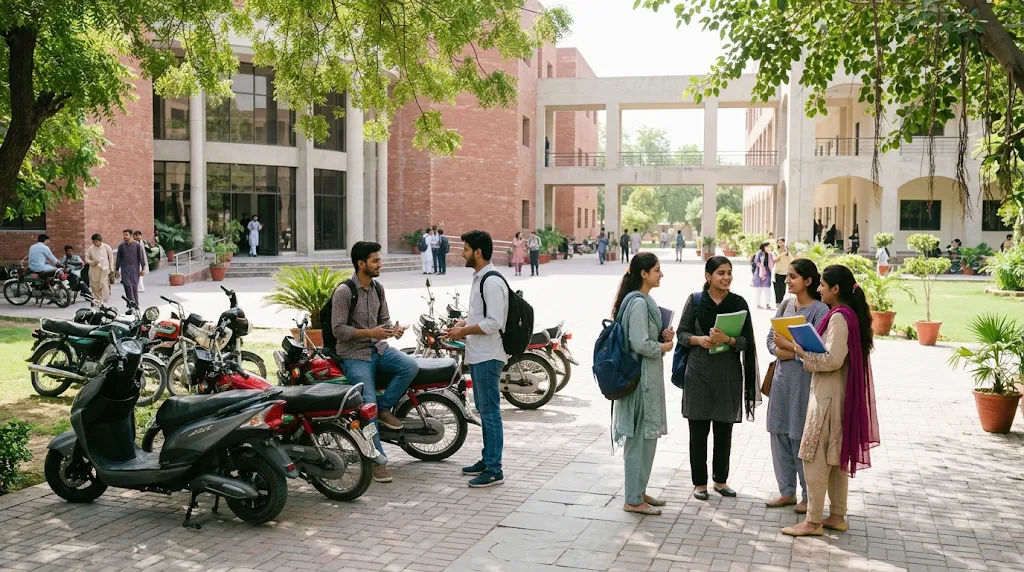
Understanding the eligibility requirements is important before applying. The age requirement, educational status, valid driving license, residency, and application documents may all affect whether someone qualifies. The Maryam Nawaz bike scheme is especially relevant to students who want to understand how the program works, who can apply, and what conditions they must meet before submitting an application.
This guide explains the age limit, eligibility criteria, application process, documentation, and important details applicants should review before making any decisions.
What Is the Maryam Nawaz Bike Scheme?
The scheme is a Punjab government initiative associated with providing students with access to motorcycles through a subsidized or installment-based arrangement. Its purpose is to help students travel between home, college, university, and other educational destinations more conveniently.
Transportation can be a significant challenge for students, particularly those living far from their institutions. Daily fares, limited public transport routes, and long commuting times may affect attendance and academic routines. A motorcycle can offer more flexibility, although it also requires responsible driving, proper licensing, safety equipment, and regular maintenance.
The initiative has received attention because it focuses on students and practical transportation needs rather than simply offering a general financial benefit.
Main Objectives of the Scheme
The program is designed around several broad goals:
-
Helping students access educational institutions more easily.
-
Reducing transportation difficulties for eligible students.
-
Supporting mobility in areas with limited public transport.
-
Offering a structured financing option instead of requiring the full purchase price upfront.
-
Encouraging students to manage their travel needs independently and responsibly.
The exact features of the scheme may change according to government announcements, funding arrangements, and application phases.
What Is the Maryam Nawaz Bike Scheme Age Limit?
The Maryam Nawaz bike scheme s one of the most important eligibility questions for students interested in the scheme. In previous student bike program criteria, applicants generally needed to be at least 18 years old to qualify for the motorcycle category, mainly because driving a motorcycle on public roads requires legal eligibility and licensing.
However, applicants should distinguish between the age requirements of a particular scheme phase and the legal requirements for riding a motorcycle. Eligibility criteria can be updated, and applicants should check the latest official announcement before relying on an age range.
Minimum Age Requirement
The minimum age is generally expected to be 18 years for applicants seeking a motorcycle under student bike initiatives. This age requirement is connected with legal driving eligibility and the need to hold the appropriate license.
Students younger than 18 may not meet the requirements for the motorcycle category even if they are enrolled in a college or university. Being a student alone does not automatically make someone eligible.
Maximum Age Requirement
A maximum age may be specified in particular program rules, but it should not be assumed to be the same in every phase. Some student programs focus on enrolled students and may define eligibility based on age, education level, or other conditions.
Applicants should review the latest scheme announcement to confirm whether a maximum age applies and how it is calculated.
Why Age Matters
Age is used to establish whether an applicant meets the program's basic eligibility conditions. It also relates to the legal responsibilities involved in operating a motorcycle.
Applicants should provide their correct date of birth and ensure that their identification documents contain accurate information. Incorrect details can create verification issues or lead to an application being rejected.
Eligibility Requirements Beyond Age
Age is only one part of the eligibility process. Students may also need to meet academic, residency, identification, and other conditions depending on the phase of the program.
Student Enrollment
Earlier versions of the student bike initiative focused on regular students enrolled in degree colleges or universities recognized by the Higher Education Commission. Students were generally required to provide proof of enrollment through their educational institutions.
Enrollment requirements help ensure that the program supports students who need transportation for their academic activities.
Punjab Residency
Punjab residency or domicile requirements have been included in previous program announcements. These conditions help determine whether applicants belong to the province covered by the initiative.
Residency requirements may differ between program phases, so applicants should not assume that the rules of an earlier round remain unchanged.
Driving Permit or License
The program has also required applicants to hold a valid motorcycle learner's permit or driving license. This requirement is important because a motorcycle is a motor vehicle that must be operated according to applicable traffic laws.
A student should never assume that eligibility for a government program automatically gives permission to ride a motorcycle. Legal driving requirements, age restrictions, licensing rules, and safety regulations remain separate responsibilities.
Why the Age Limit Is Important for Students
The age requirement is not simply an administrative condition. It is connected with road safety, maturity, legal responsibility, and the ability to understand the risks associated with operating a motor vehicle.
Students travel in different traffic conditions every day. Roads may have heavy vehicles, buses, cars, pedestrians, uneven surfaces, and unpredictable traffic behavior. Responsible transportation planning is therefore important for young people.
Legal Responsibility
Motorcycle riders must follow traffic regulations, understand road signs, and respect the rights of other road users. Riding without the required legal permission can result in penalties and create risks for the rider and other people.
Road Safety Awareness
Safe road use requires concentration and awareness. Riders must understand traffic signals, intersections, road conditions, and how to respond calmly to unexpected situations.
Safety is especially important for inexperienced road users. Being familiar with a route or riding occasionally does not necessarily mean someone is prepared for every traffic situation.
Personal and Financial Responsibility
A motorcycle involves ongoing expenses and responsibilities. These can include maintenance, registration requirements, protective equipment, and other costs.
Students should understand that transportation decisions can affect their family budgets and daily routines. Any vehicle-related financial arrangement should be carefully understood by the responsible adults involved.
How Eligibility Rules Have Changed Between Scheme Phases
One reason people search for the age limit is that information from different scheme phases may appear online at the same time.
The first phase of the Punjab student bike initiative in 2024 generally listed applicants as being over 18 years of age, enrolled as regular students at eligible degree colleges or universities, and holding a motorcycle learner's permit or driving license.
Later announcements and eligibility information have sometimes presented different requirements. These differences can arise from changes to the program, updated administrative rules, or new eligibility categories.
Phase One Requirements
The original student bike initiative generally included the following conditions:
-
Applicants had to be over 18 years old.
-
They had to be regular students at eligible colleges or universities.
-
They needed a valid motorcycle learner's permit or driving license.
-
Punjab domicile was among the eligibility conditions.
-
Applications could be subject to electronic balloting when demand exceeded the available allocation.
These conditions were associated with the initial student motorcycle distribution program.
Phase Two Requirements
Later phases have been discussed with updated eligibility conditions, including changes in student categories and identification requirements. Some reports have also described different minimum-age rules.
This is why a student should not rely only on an older blog post, social media graphic, or forwarded message when trying to understand the scheme.
The Maryam Nawaz bike scheme has been discussed in different contexts, and the eligibility conditions should be understood according to the specific phase rather than treating every announcement as identical.
Is There a Maximum Age Limit?
The maximum age limit is another question frequently asked by students. Some government student initiatives are designed for a particular age group, while others primarily focus on enrollment status and educational eligibility.
A maximum age limit should only be considered confirmed when it appears in the official rules for the relevant phase.
Why a Maximum Age May Not Be Clearly Listed
Educational programs may include students who begin, resume, or complete their education at different ages. As a result, age-related requirements may not always be identical across programs.
A maximum age condition may be introduced for a particular funding round, but it should not be assumed unless the official eligibility criteria clearly state it.
Age Verification
Age verification normally relies on official identification or other recognized documents. Accurate information is important because inconsistencies between identification documents and application records can cause administrative problems.
Students and families should avoid sharing personal identification details publicly or with unverified individuals claiming to represent a government scheme.
Documents Commonly Associated With Student Eligibility
Although document requirements may change, student programs generally need information to confirm identity, enrollment, and eligibility. Understanding the purpose of these documents helps students avoid confusion.
Identification Documents
Identity documents are used to verify the applicant's name, date of birth, and other necessary details. The age limit may be checked through these records.
Students should keep their personal information accurate and avoid submitting altered or misleading documents.
Educational Verification
Proof of enrollment can help confirm that an applicant is attending an eligible educational institution. This may include institutional records or other accepted verification methods.
Enrollment verification is particularly important for programs intended specifically for students rather than the general public.
Driving-Related Documentation
Where a learner's permit or driving license is required, it serves as evidence that the applicant meets the applicable licensing condition.
A motorcycle permit and a motorcycle driving license are not necessarily identical. Their permissions and restrictions may differ, so the relevant traffic laws must be understood before riding.
Common Misunderstandings About the Age Limit
Many questions about the student bike initiative come from confusing general eligibility, legal driving age, and the rules of a particular application round.
Being a College Student Does Not Automatically Mean Eligibility
A person may be enrolled in a college but still not satisfy all the program conditions. Age, institution recognition, identification, residency, and licensing requirements may all be relevant.
Educational enrollment is just one component of eligibility.
Turning 18 Does Not Guarantee Selection
Meeting the minimum age does not necessarily mean that an applicant will receive a motorcycle. Programs may have limited allocations, verification procedures, and selection arrangements.
Eligibility means that a person meets the required conditions. It is not the same as guaranteed selection or distribution.
Older Information May Be Inaccurate
Articles published during earlier phases may continue to circulate even after the government introduces new rules.
Students should pay attention to the date of an announcement and whether it refers to the first phase, a later phase, or a completely different transportation initiative.
A Learner's Permit Is Not the Same as Unlimited Driving Permission
A learner's permit may carry specific conditions and restrictions. Students should not assume it provides the same permissions as a full driving license.
The safest approach is to understand the permit's conditions and follow traffic regulations carefully.
Why the Scheme Is Important for Education
Transportation is an important part of educational access. Students who live far from their colleges may experience difficulties with commuting, particularly when public transport is unreliable, expensive, or unavailable at convenient times.
A transportation initiative can help address some of these difficulties, but it is not the only way to improve student mobility.
Reducing Daily Travel Difficulties
Long commutes can affect a student's daily schedule. Reliable transport may help students plan their arrival times and coordinate their academic responsibilities.
The ability to travel more conveniently can be helpful when students have early classes, practical sessions, examinations, or other activities that require them to attend campus.
Supporting Access to Educational Institutions
Students living in areas with limited transport connections may face additional challenges reaching colleges and universities.
Transportation support can be part of a broader effort to make educational opportunities more accessible. However, access also depends on financial circumstances, institutional availability, family support, and the safety of the commuting environment.
Encouraging Independence and Responsibility
Transportation programs may encourage students to think about time management and personal responsibility. However, independence should be balanced with safety and legal requirements.
Responsible commuting involves planning ahead, respecting traffic rules, and considering the needs of other people on the road.
Responsible Transportation and Safety Considerations
A student transportation program should be viewed alongside road safety and responsible commuting. A motorcycle can make travel more convenient, but it also requires attention, preparation, and respect for traffic laws.
Protective Equipment
Proper protective equipment plays an important role in reducing the risk of injury. A correctly fitted helmet is one of the most important safety items for motorcycle riders. Other protective clothing can also help provide protection during travel.
Safety equipment should never be treated as optional simply because a journey is short.
Road Conditions
Traffic conditions vary between cities, neighborhoods, and rural areas. Busy intersections, road construction, weather, and poor visibility can make commuting more challenging.
Students should recognize that road conditions can change quickly. Responsible road use means following traffic laws and avoiding distractions.
Family Awareness
Families can help students make informed transportation decisions by discussing safety, costs, commuting conditions, and legal responsibilities.
Supportive conversations can help young people recognize that transportation is not only about convenience. It is also about making careful decisions that protect themselves and others.
Conclusion
The age limit for the Maryam Nawaz student bike initiative is an important eligibility condition, but it should not be considered in isolation. The original 2024 student bike scheme generally required applicants to be over 18 years old, along with regular student enrollment, Punjab residency, and a motorcycle learner's permit or driving license. Later phases may introduce revised eligibility conditions, which is why older information can sometimes conflict with newer announcements.
CM Special Monitoring Unit+1
Students should understand the difference between meeting the age requirement, qualifying for a scheme, being selected, and legally operating a motorcycle. Each involves separate conditions and responsibilities. Accurate identification, educational records, awareness of applicable rules, and responsible road behavior are all important.
The initiative highlights the importance of transportation in supporting education and helping students manage daily travel. However, eligibility should always be considered alongside road safety, financial responsibility, and legal requirements.
Ultimately, understanding the age limit and other eligibility conditions helps students and families avoid confusion and make informed decisions about educational transportation programs. Staying informed about official announcements is the most reliable way to understand which rules apply to a particular phase of the scheme.