Mobile gaming has become a popular form of entertainment for people of all ages. Whether someone enjoys multiplayer battles, racing games, sports simulations, or strategy games, a reliable internet connection can make a major difference. However, many players wonder how fast their internet connection should be to enjoy smooth gameplay without interruptions. 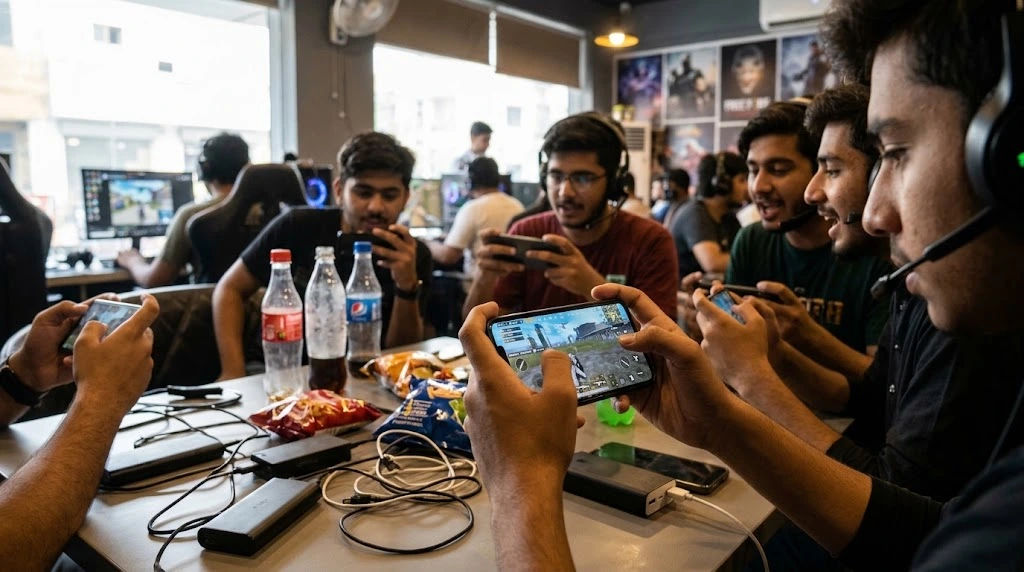 The good news is that most mobile games do not require extremely fast internet speeds. Instead, they need a stable connection, low latency, and sufficient bandwidth to communicate with game servers. Understanding these factors can help players choose a suitable internet package and avoid unnecessary expenses.
Mobile gaming depends on several internet-related factors, including download speed, upload speed, ping, network stability, and connection type. A fast connection may improve certain online activities, but speed alone does not guarantee a smooth gaming experience.
This comprehensive guide explains the internet speed requirements for different types of games, how much bandwidth players actually need, and what they can do to improve their connection.
Internet Speed for Online Games
Internet speed describes how quickly information travels between your device and the internet. It is usually measured in megabits per second (Mbps).
When playing an online game, your smartphone continuously exchanges information with a game server. This information may include your character's movement, actions, position, and other players' activities.
A suitable internet connection allows this information to travel without unnecessary delays.
There are three important factors to understand.
Download Speed
Download speed measures how quickly your device receives information from the internet.
It helps when downloading games, installing updates, loading online content, and receiving information from game servers.
Most online games do not require extremely high download speeds during active gameplay. However, faster speeds can make downloading large game files and updates more convenient.
Upload Speed
Upload speed measures how quickly your smartphone sends information to the internet.
This is important because your device needs to communicate your movements, commands, and actions to the game server.
A weak upload connection can cause delayed actions or communication problems, particularly in competitive multiplayer games.
Ping and Latency
Ping measures how long information takes to travel between your device and a server and return. It is measured in milliseconds (ms).
Latency is particularly important for competitive games because even a small delay can affect gameplay.
For example, if you move your character or fire a weapon, the game server must receive that command and respond. High latency can make the action appear delayed.
How Much Internet Speed Does Mobile Gaming Need?
The required internet speed depends on the type of game, number of connected players, and online features.
Most mobile games can operate comfortably with relatively modest internet speeds when the connection is stable.
Here is a general guide to recommended speeds:
|
Gaming activity |
Suggested download speed |
|---|---|
|
Simple online games |
1–3 Mbps |
|
Casual multiplayer games |
3–5 Mbps |
|
Competitive multiplayer games |
5–10 Mbps |
|
Online racing and sports games |
5–10 Mbps |
|
Battle royale games |
5–10 Mbps |
|
Cloud gaming |
15–35 Mbps or more |
These figures are practical guidelines rather than universal minimum requirements. Actual requirements vary between games and services.
Minimum Internet Speed for Casual Games
Casual games usually involve simple mechanics, limited multiplayer interaction, and fewer real-time updates.
Examples include puzzle games, card games, word games, and basic online competitions.
A connection of around 1–3 Mbps may be sufficient for many of these activities.
However, players should remember that other devices using the same network can affect available bandwidth.
Recommended Speed for Competitive Games
Competitive games require frequent communication between smartphones and game servers.
Players need to receive updates and send commands quickly to maintain accurate gameplay.
A connection offering approximately 5–10 Mbps is generally sufficient for many competitive mobile titles, provided that latency and stability are good.
For these games, reducing ping is often more important than purchasing a package with extremely high download speeds.
Internet Speed for Battle Royale Games
Battle royale games involve multiple players competing in a shared environment.
The game constantly updates player positions, movements, interactions, and other important information.
A stable connection with approximately 5–10 Mbps download speed is a reasonable starting point for many titles.
Players should also look for low latency and minimal packet loss to avoid sudden interruptions.
Why Ping Matters More Than Download Speed
Many players assume that a higher internet speed automatically means better gameplay. However, this is not always true.
A connection with 100 Mbps download speed can still produce lag if its latency is high or its network is unstable.
Ping measures responsiveness rather than the amount of information your connection can transfer every second.
Consider two examples:
-
Player A has 10 Mbps internet speed and 25 ms ping.
-
Player B has 100 Mbps internet speed and 150 ms ping.
Player A may experience more responsive gameplay because commands reach the server much faster.
Understanding Different Ping Levels
The following ranges provide a general indication of online gaming performance.
|
Ping |
Expected experience |
|---|---|
|
Below 20 ms |
Excellent responsiveness |
|
20–50 ms |
Very good gameplay |
|
50–100 ms |
Generally playable |
|
100–150 ms |
Noticeable delays may occur |
|
Above 150 ms |
Lag can become problematic |
These ranges are approximate. Actual performance depends on the game, server location, routing, and network conditions.
For competitive players, keeping ping below 50 ms is a useful target whenever possible.
Does Upload Speed Matter for Mobile Gaming?
Yes. Upload speed is another important part of a reliable gaming connection.
Although download speed often receives more attention, online mobile gaming also depend on information sent from your smartphone to remote servers.
For example, when you move, attack, or interact with another player, your device sends those commands through the internet.
If the upload connection becomes unstable, the server may receive information late.
Recommended Upload Speed
For many ordinary online mobile games, approximately 1–3 Mbps upload speed is a reasonable starting point.
More demanding activities, such as streaming gameplay while playing or participating in voice communication, may require additional upload capacity.
Players should consider their overall internet usage instead of focusing only on download speed.
Wi-Fi vs Mobile Data for Gaming
Players can access online games through Wi-Fi or mobile data. Both options can provide good performance, but their reliability depends on several conditions.
Wi-Fi Connection
Wi-Fi is a convenient choice for playing games at home.
A good router can provide consistent internet access without requiring mobile data packages.
However, performance may decrease when multiple people use the same network or when the smartphone is far away from the router.
Walls, electronic interference, and router placement can also affect signal strength.
Mobile Data Connection
Mobile data allows players to enjoy games while travelling or spending time outside their homes.
Modern 4G and 5G networks can provide sufficient speed for most online mobile games.
However, signal strength, network congestion, and coverage can influence performance.
A strong 4G connection may provide a better gaming experience than a weak 5G signal.
Which Option Is Better?
Neither option is automatically better in every situation.
A stable home Wi-Fi connection is often suitable for regular gaming, while mobile data provides flexibility.
The best choice is the one that offers consistent speeds, low latency, and minimal packet loss in your location.
How Different Types of Games Affect Internet Requirements
Not every game uses the internet in the same way.
Some games require constant communication with remote servers, while others only need an internet connection for occasional updates.
Multiplayer Shooting Games
Shooting games require quick communication between players and servers.
A delayed response can affect aiming, movement, and combat performance.
For this reason, players should prioritize low ping, stable upload speeds, and minimal packet loss.
Online Racing Games
Racing games often involve real-time multiplayer interactions.
The game must communicate vehicle positions, speed, movement, and race progress.
A stable connection with low latency helps maintain a smooth experience.
Sports Games
Online sports games require frequent updates about player movements, ball positions, and match events.
A reliable connection is important because delays can affect the timing of important actions.
Strategy and Card Games
Many strategy and card games require less continuous communication.
They may work well with relatively low internet speeds because actions are not always dependent on split-second responses.
However, a connection interruption can still disconnect players or affect ongoing matches.
Does Cloud Gaming Require Faster Internet?
Cloud gaming is different from traditional mobile gaming.
Instead of processing the entire game directly on the smartphone, a remote server runs the game and streams the video to the device.
The smartphone sends player commands back to the server.
This process requires more bandwidth than many conventional online mobile games.
Recommended Cloud Gaming Speed
Depending on the platform, streaming resolution, and frame rate, cloud gaming may require approximately 15–35 Mbps or more.
Higher resolutions and smoother frame rates can increase bandwidth requirements.
A stable connection is especially important because interruptions can affect both video quality and responsiveness.
Players should also consider data consumption before using cloud gaming through limited mobile data packages.
Factors That Can Affect Mobile Gaming Performance
Even a high-speed internet package cannot guarantee perfect gameplay.
Several other factors can influence connection quality.
Network Congestion
When many people use the same network, available bandwidth may become limited.
This can happen during busy evening hours when households are streaming videos, downloading files, or using multiple devices.
Network congestion can increase latency and cause inconsistent performance.
Distance From Game Servers
The physical distance between your smartphone and the game server can affect ping.
When information needs to travel across longer distances, communication may take more time.
Choosing a nearby server region can often improve responsiveness.
Weak Wi-Fi Signals
A weak wireless signal can cause connection interruptions and inconsistent speeds.
Players should avoid gaming too far from their router.
Placing the router in an open and central location may help improve coverage.
Background Applications
Other applications running on your smartphone may use internet bandwidth.
Automatic updates, cloud backups, video streaming, and downloads can compete with gaming traffic.
Closing unnecessary applications can help maintain a more consistent connection.
Smartphone Performance
Internet speed is not the only factor responsible for smooth gameplay.
An older smartphone, limited memory, overheating, or poor hardware performance can also cause lag.
Players should distinguish between network lag and device-related performance problems.
How to Test Your Internet Speed Before Playing
Testing your internet connection is a useful way to identify possible problems.
Players can use online speed-testing services to measure download speed, upload speed, and ping.
Popular options include Ookla Speedtest and Fast.com.
Steps to Check Your Connection
-
Connect your smartphone to the network you normally use for gaming.
-
Open a reliable internet speed-testing website or application.
-
Run the speed test.
-
Check download and upload speeds.
-
Review the ping result.
-
Repeat the test at different times to identify fluctuations.
Do not rely on only one speed test.
Your internet connection may perform differently during busy and quiet hours.
It is also useful to check the ping displayed inside your game because the game's actual server location may differ from the speed-testing server.
Practical Ways to Improve Internet Performance
Players do not always need to purchase a more expensive internet package to improve their experience.
Small changes can sometimes make a noticeable difference.
Use a Reliable Wi-Fi Network
If you play at home, connect to a dependable Wi-Fi network.
The 5 GHz Wi-Fi band can offer faster speeds and less interference in suitable conditions, although its range is generally shorter than 2.4 GHz.
If your router and smartphone support it, consider testing both bands.
Move Closer to the Router
Distance and physical obstacles can weaken wireless signals.
Try playing in the same room as the router or in an area with a strong signal.
Avoid placing the router behind large furniture or inside enclosed cabinets.
Stop Unnecessary Downloads
Large downloads can consume available bandwidth.
Pause automatic updates and file downloads while playing competitive games.
This can help reduce network congestion.
Choose the Correct Game Server
Many online games allow players to select a server region.
Whenever possible, choose a server geographically closer to your location.
This may reduce latency and improve responsiveness.
Restart Your Router
Routers can occasionally experience performance problems after extended operation.
Restarting the router may help resolve temporary connection issues.
However, if problems continue regularly, the router or internet service may need further attention.
Monitor Mobile Data Signal Strength
If you use mobile data, try playing in an area with stronger network coverage.
Avoid locations where the signal frequently changes or becomes weak.
You can also compare performance between 4G and 5G when both are available.
How Much Data Does Mobile Gaming Consume?
Internet speed and data consumption are two different things.
Speed determines how quickly information travels, while data consumption measures how much information is transferred.
Many conventional online games use relatively small amounts of data during gameplay.
A rough estimate for many online games is around 20–100 MB per hour, although some games may use more.
Actual usage depends on the game, voice chat, updates, advertisements, and other online features.
Cloud gaming is considerably more data-intensive because it continuously streams video.
For players with limited mobile data, checking consumption is important.
Downloading large updates through Wi-Fi instead of mobile data can also help reduce expenses.
Choosing the Right Internet Package for Mobile Gaming
Selecting an internet package should involve more than comparing advertised download speeds.
Players should consider their gaming habits and the number of people sharing the connection.
For someone who plays casual games occasionally, a modest broadband or mobile data package may be enough.
Competitive players should prioritize low latency and consistent performance.
Families sharing one internet connection may benefit from higher bandwidth because several devices can operate simultaneously.
Cloud gaming users should consider packages with higher speeds and sufficient monthly data allowances.
Before choosing a package, compare the following:
-
Advertised and actual download speeds.
-
Available upload speeds.
-
Average latency and connection stability.
-
Data limits and fair usage policies.
-
Network coverage in your area.
-
Customer support and service reliability.
A reliable 10 Mbps connection can sometimes provide a better gaming experience than a faster but unstable connection.
Common Internet Problems During Mobile Gaming
Understanding common connection problems can help players identify suitable solutions.
Sudden Lag During Matches
Sudden lag may result from network congestion, weak signals, or temporary server problems.
Checking your ping during gameplay can help determine whether the issue is related to the network.
Frequent Disconnections
Repeated disconnections may indicate unstable Wi-Fi, mobile network problems, or router issues.
Testing another network can help identify the source.
High Ping Despite Fast Internet
This situation may occur because of distant servers, poor routing, or network congestion.
Changing the server region or contacting your internet provider may help.
Slow Game Updates
Slow downloads may be caused by limited bandwidth, busy servers, or background network activity.
Pausing other downloads and using a reliable Wi-Fi connection can improve the process.
Conclusion
Choosing the right internet connection is essential for enjoying smooth and responsive gameplay. However, players do not necessarily need an extremely fast internet package to enjoy their favourite online titles.
For most conventional games, a download speed of approximately 3–10 Mbps can provide a suitable starting point. Casual games may need even less, while cloud gaming generally requires considerably more bandwidth.
The most important factors are low ping, stable upload and download speeds, minimal packet loss, and reliable network coverage. These factors often make a greater difference than download speed alone.
Players should also consider their smartphone performance, game server location, network congestion, and background applications when troubleshooting connection problems.
Ultimately, the best internet package is one that matches your gaming requirements without unnecessary expense. By testing your connection, improving router placement, choosing suitable servers, and monitoring data usage, you can enjoy a more consistent mobile gaming experience.
With the right combination of speed, stability, and low latency, players can make their online sessions smoother, more enjoyable, and less frustrating.dditional technical guidance, HP provides an explanation of gaming bandwidth, latency, and connection stability.